Surrey ecommerce website planning
Surrey pages include ecommerce, catalogue, and conversion-path planning.

Netvibes Infotech Ltd. services
Help customers find products, request a quote or buy online. We plan your catalogue, payment or quote flow, and the steps your team follows to fill each order.

Service overview
Netvibes is based in Surrey and builds ecommerce websites and catalogue workflows for Canadian businesses. Start with how customers choose a product and how your staff fulfil an order. We scope categories, variants, search, quote or checkout paths and product administration around that process. A standard hosted store may be enough; custom Django work needs a clear business reason.
Best fit
Retailers launching or replacing a store: You need an organized catalogue, a usable mobile shopping path and clear staff responsibilities.
Parts suppliers with compatibility data: Customers need vehicle-based browsing backed by an authorized fitment source.
Businesses with quote or order workflows: Define whether customers pay online, request pricing or use an agreed combination.
Deliverables
Project flow
Technical stack
Agree categories, attributes, SKU identifiers, images, specifications, filters and search before importing products. Define which options create separately priced or stocked variants, such as size or finish. Identify the source for prices and availability, missing data and who approves it. Product counts, data cleanup and recurring imports affect the quote; a supplier file is not automatically ready to publish.
Parts stores may need make, model, year or generation browsing alongside ordinary categories. Fitment is a compatibility relationship, not simply a colour or size variant. We can scope navigation around merchant-approved compatibility data and test representative matching and non-matching products. The business must supply or authorize the fitment source; a vehicle filter alone does not establish that a part fits.
Concept Distributing is an Abbotsford UTV and ATV parts project. Its public store shows make-and-model pathways and parts categories. Big Country Customs is an off-road parts ecommerce project. Its public store shows vehicle-based browsing, product search and online shopping. These are examples of catalogue and shopping interfaces, not measured revenue or conversion results. They do not imply that every integration described here was delivered in either project.
Define delivery regions, pickup, product weights and dimensions, rate sources and restricted items. Flat rates, zones and carrier connections are different scopes; live rates depend on the chosen provider and account access. For Stripe or another agreed payment provider, confirm account ownership, fees and the supported integration. Test successful, declined and cancelled payments, order creation and notifications in a suitable test environment. Agree refunds and order-status handling rather than assuming they are included.
The ecommerce payment workflow example shows how to plan order states and test what happens when a payment notification is late.
Name the source of truth for stock and prices. Agree when stock changes, how imports or connected systems update it, and what happens when an update fails. Existing inventory, accounting or supplier connections need interface documentation, authorized access and a separate feasibility review; no universal connector is promised.
Tax setup follows the business-approved requirements: registrations, selling destinations, product treatment and any exemptions. Configure the agreed rules and compare representative test orders with expected totals supplied or reviewed by the business and its tax adviser. Configuration and testing are the development scope; tax advice and a blanket compliance guarantee are not included.
If the store needs stock or order details from another system, agree the integration for stock and order records before choosing which system owns each value.
The ecommerce website package starts at $1,999 CAD for an eligible approved scope, including initial entry of up to 20 client-supplied products. Its page sets out the inclusions, product-data responsibilities, hosting limits and exclusions. A larger initial import, fitment data, custom workflows and advanced integrations need assessment and a written quote. This service page explains the decisions; it does not expand the package terms.
Use our ecommerce development guides to compare a quote catalogue, a store with checkout and a custom order workflow.
Review the catalogue, mobile shopping flow, checkout or quote submission, order totals, notifications and staff permissions before launch. For a replacement store, agree URL redirects and the handling of products and orders during transition. Handover covers the agreed product and order controls. Define hosting, backups, updates, restore responsibilities, support coverage and future feature work in writing. Read the maintenance and support policy and discuss the website maintenance service for ongoing work.
Local coverage
These location links are selected because they match this service focus. Use the locations hub for the full Website Development location list.
Surrey pages include ecommerce, catalogue, and conversion-path planning.
Vancouver ecommerce structure and product discovery context.
Richmond retail, logistics, and product inquiry use cases.
Burnaby retail and light-industry ecommerce context.
Langley ecommerce and service-business page structure.
Abbotsford retail, agriculture, and quote workflow planning.
Delta product, logistics, and warehouse-service context.
Project clarity
Project examples
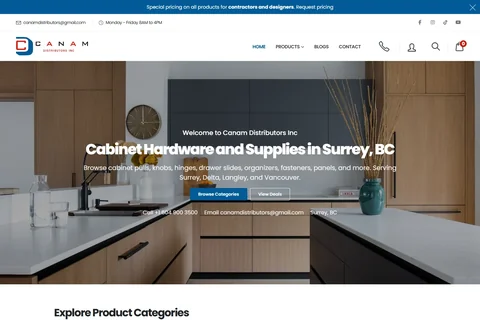
Product Catalogue
Canam needed a way to show its cabinet hardware range online. The Surrey supplier’s catalogue lets buyers compare products such …
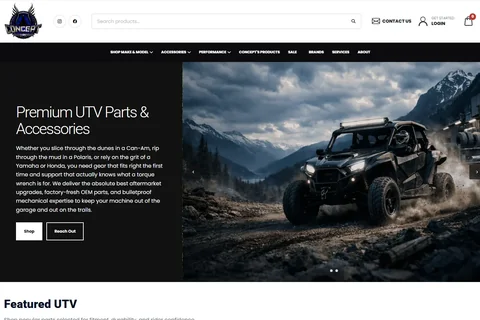
Ecommerce
Concept Distributing needed a way for shoppers to find UTV and ATV parts that fit. The store lets buyers browse …
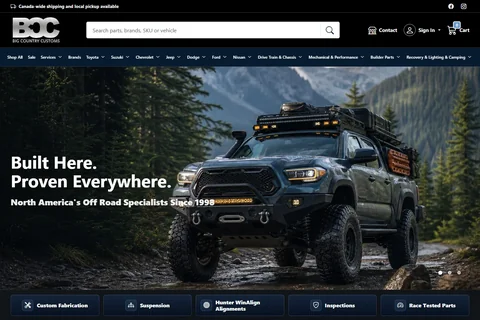
Website Development
Shoppers can browse off-road parts by vehicle, search the catalogue and buy online. The site gives buyers a way to …
Next services
Compare the full list of Netvibes services if you are planning a different type of project.
Questions
Not necessarily. A hosted platform may fit a straightforward catalogue. Compare it with custom work when product rules, quote workflows or integrations justify the additional development and maintenance.
A quote workflow can be scoped instead of, or alongside, checkout. Agree the information collected, who prices the request and how the customer receives a response.
Where included, we provide the agreed product and order controls with a handover. Identify who owns prices and stock, particularly when another system also updates them.
Share your current URL, approximate product and variant counts, delivery regions, existing payment and inventory systems, and the main change needed. Describe the data; do not send customer records or account credentials.
Tell us your current URL, approximate product and variant counts, delivery regions and existing systems. Start with the workflow you need to improve.